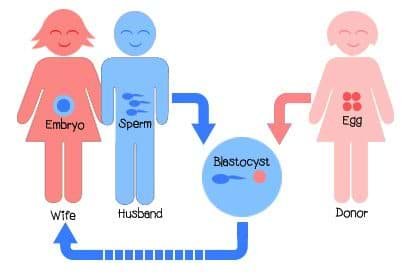
Building a family through assisted reproduction can involve several medical steps and important personal decisions. Gestational surrogacy can help individuals or couples build a family when carrying a pregnancy is not possible or could create serious medical complications. In this arrangement, a gestational carrier carries a pregnancy created using an embryo formed through in vitro fertilisation (IVF).
A gestational carrier has no genetic connection to the child when the embryo is created using an egg from the intended parent or an egg donor, along with sperm from the intended father or a sperm donor. Understanding each stage can help intended parents prepare for the medical, emotional, and legal aspects of the process.
The Role of an Egg Donor in IVF
An egg donor may be needed when the intended mother cannot produce viable eggs, has certain genetic concerns, or cannot use her own eggs for other medical reasons. Donated eggs are collected following a carefully managed process involving ovarian stimulation and a medical procedure.
Once retrieved, the eggs are fertilised with sperm in a laboratory. The resulting embryos are monitored for development before specialists decide which may be suitable for transfer. Choosing an egg donor involves considering medical history, genetic screening, donor eligibility, and applicable legal requirements.
How Embryo Transfer Works
Embryo transfer is a key stage of IVF and gestational surrogacy. After fertilisation, an embryo is selected for transfer into the gestational carrier’s uterus. The carrier may receive medication beforehand to prepare the uterine lining, depending on the treatment protocol.
The procedure usually involves placing the embryo into the uterus through a thin catheter. It is generally straightforward and does not usually require surgery or general anaesthesia. A pregnancy test is performed after the waiting period recommended by the fertility clinic.
Although embryo transfer is an important milestone, pregnancy is not guaranteed. Success can depend on factors such as embryo quality, age at egg retrieval, uterine health, and individual medical circumstances. More than one transfer may sometimes be needed.
Understanding PGT and Genetic Screening
Preimplantation genetic testing (PGT) is a laboratory technique used to examine embryos for specific genetic or chromosomal findings before transfer. Depending on the indication, PGT may help identify certain inherited conditions or chromosomal abnormalities.
There are different types of PGT, including PGT-M for specific monogenic conditions, PGT-SR for certain structural chromosome rearrangements, and PGT-A for assessing chromosome number. However, PGT is not suitable or necessary for every IVF cycle. It cannot guarantee a healthy baby, eliminate every genetic risk, or predict all pregnancy outcomes.
Making Informed Decisions
Every fertility journey is different, and there is no single approach that suits everyone. Learning about an egg donor, PGT, and embryo transfer can help intended parents ask informed questions and understand their options. With appropriate medical guidance, ethical support, and careful planning, gestational surrogacy can offer a considered path towards parenthood.
Reliable fertility guidance, personalised coordination, and clear communication are valuable throughout this process. Access to information about donor options, genetic testing, treatment planning, and the practical requirements of surrogacy can help intended parents approach each decision with greater confidence and clarity.
This article is educational and does not replace individualized medical advice, diagnosis or treatment.
Keep your momentum.
Use the next and previous guide controls to continue through connected health topics.