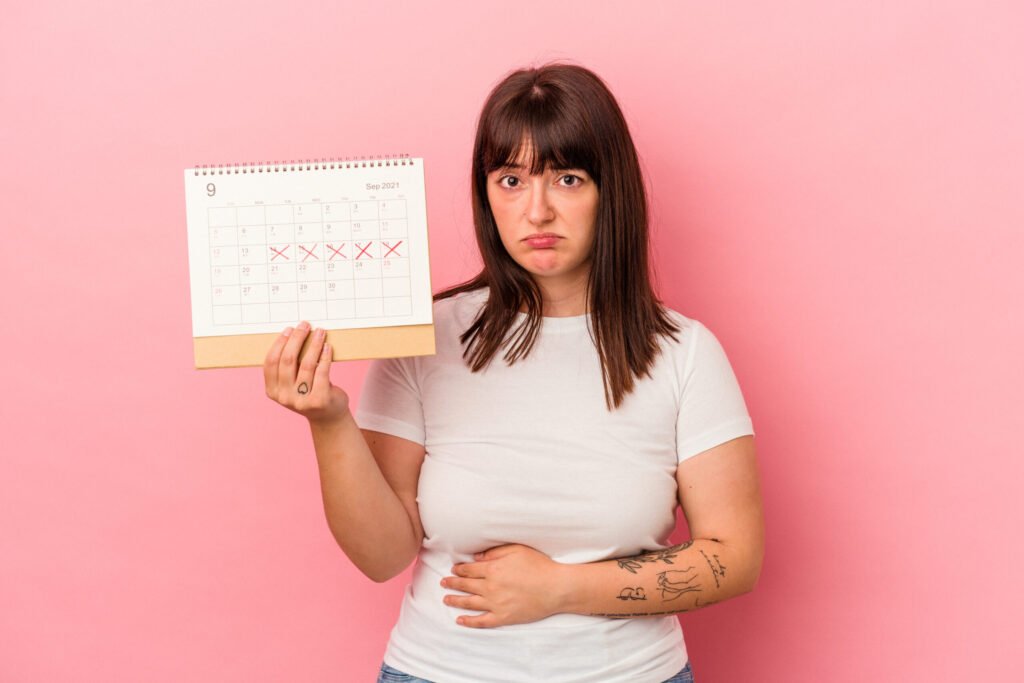
An occasional off-schedule period isn’t automatically alarming — cycles naturally shift a little from month to month. But when irregularity becomes the pattern rather than the exception, it’s worth actually understanding the irregular periods causes behind it instead of just shrugging it off.
What Counts as “Irregular,” Exactly
Quick answer: A cycle is generally considered irregular if it’s shorter than 21 days, longer than 35 days, or varies by more than 7-9 days from month to month on a consistent basis.
PCOS (Polycystic Ovary Syndrome)
This is one of the most common causes of irregular periods, affecting roughly 1 in 10 women of reproductive age. PCOS disrupts ovulation due to hormonal imbalances, often causing cycles to become unpredictable or infrequent.
Thyroid Imbalances
Both an underactive and overactive thyroid can throw off menstrual regularity. This connection surprises a lot of people — thyroid issues often get overlooked as a cause because the symptoms (fatigue, weight changes) seem unrelated to periods at first glance.
Stress
High, sustained stress affects the hypothalamus, the part of your brain that regulates the hormones controlling your cycle. A genuinely stressful period in life — exams, a big move, grief — can delay or skip a period entirely without any other medical cause.
Significant Weight Changes
Both rapid weight loss and weight gain can disrupt hormone levels enough to affect cycle regularity. This is particularly common with excessive exercise combined with low calorie intake.
Perimenopause
For women in their late 30s to mid-40s, irregular periods are often an early sign of perimenopause, as hormone levels begin fluctuating in preparation for menopause.
Certain Medications
Birth control changes, some antidepressants, and blood thinners can all affect cycle regularity as a side effect. If irregularity started right after a medication change, that timing itself is a useful clue.
When Irregular Periods Need a Doctor’s Visit
- Periods that stop entirely for 3+ months without pregnancy
- Extremely heavy bleeding requiring pad/tampon changes every hour
- Severe pain that disrupts daily activities
- Bleeding between periods consistently
FAQs
Q: Are irregular periods always a sign of a health problem? Not always — occasional irregularity from stress or travel is common and usually resolves on its own, but a persistent pattern is worth investigating.
Q: Can irregular periods affect fertility? Yes, since irregular cycles often indicate irregular or absent ovulation, which can make conceiving more difficult without addressing the underlying cause first.
Q: Is PCOS curable? PCOS isn’t “cured” in the traditional sense, but it’s very manageable through diet, exercise, and medication, often resulting in more regular cycles with proper treatment.
Q: Do irregular periods mean early menopause? Not necessarily — irregular periods can happen at any reproductive age for many reasons, though in women over 40, it can be an early perimenopause sign.
Q: Can diet changes fix irregular periods? For some causes, particularly PCOS and weight-related irregularity, dietary changes combined with exercise can meaningfully improve cycle regularity over a few months.
Conclusion
One irregular cycle usually isn’t cause for alarm, but a repeated pattern deserves real attention rather than being brushed off as “just how my body is.” Tracking your cycle for a few months using an app makes it much easier to spot patterns and give your doctor useful information if you do need to seek care.
This article is educational and does not replace individualized medical advice, diagnosis or treatment.
Keep your momentum.
Use the next and previous guide controls to continue through connected health topics.