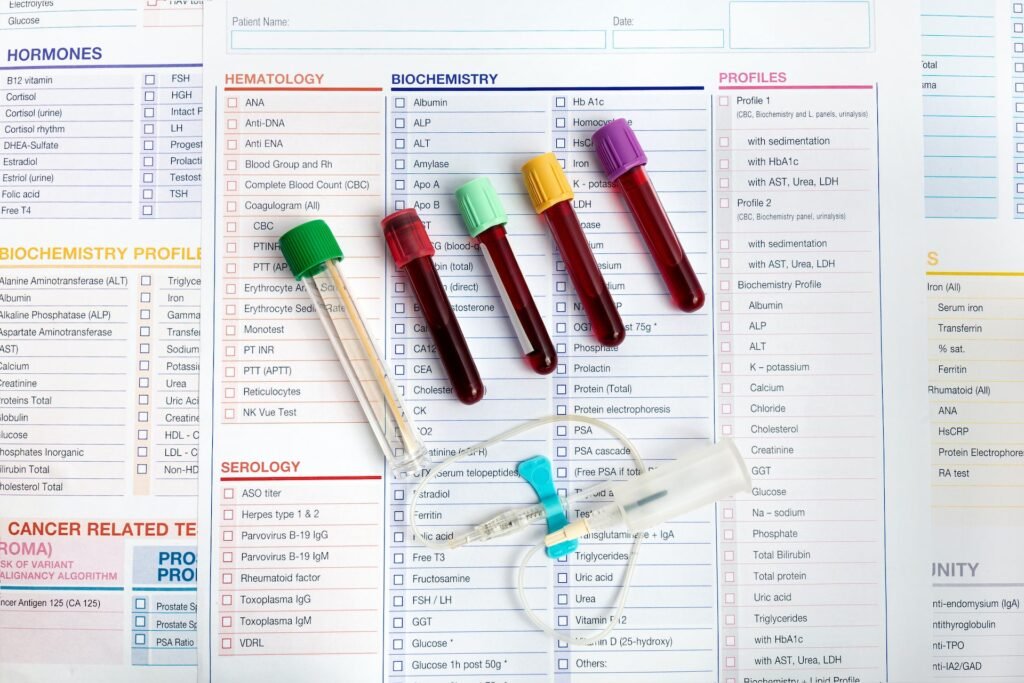
You get your blood test results back, and it’s a wall of numbers, abbreviations, and little arrows pointing up or down. No explanation. Just numbers. If you’ve ever stared at a report wondering whether “H” next to a value means you’re about to keel over, you’re not alone.
Learning how to read blood test results isn’t about replacing your doctor — it’s about not feeling completely lost when they hand you that report.
Complete Blood Count (CBC): The Basics
This is usually the first panel on any report. It measures red blood cells, white blood cells, and platelets.
Quick answer: A CBC checks your red blood cells (oxygen transport), white blood cells (infection fighters), and platelets (clotting), and abnormal values here often point to anemia, infection, or clotting issues.
- Hemoglobin (Hb): Low levels usually mean anemia. Normal range is roughly 13-17 g/dL for men, 12-15 g/dL for women.
- WBC Count: High counts often mean your body is fighting an infection right now.
- Platelets: Low counts can affect clotting; very high counts can sometimes indicate inflammation.
Blood Sugar (Glucose) Levels
Fasting glucose between 70-99 mg/dL is considered normal. Anything from 100-125 sits in the “prediabetes” zone, and 126+ on two separate tests usually means diabetes. HbA1c, a separate but related marker, shows your average blood sugar over roughly three months — this one’s harder to fake by just eating well the night before your test (a trick more people try than you’d think).
Lipid Profile: Cholesterol and Triglycerides
This panel gets a lot of attention, and for good reason.
- LDL (“bad” cholesterol): Ideally under 100 mg/dL
- HDL (“good” cholesterol): Higher is better, ideally above 40-60 mg/dL
- Triglycerides: Under 150 mg/dL is the general target
I’ve noticed people fixate purely on the total cholesterol number, when actually the ratio between LDL and HDL tells a more useful story.
Liver Function Tests (LFTs)
Enzymes like ALT and AST rise when the liver is under stress — from alcohol, certain medications, fatty liver disease, or infections like hepatitis. A single elevated reading isn’t automatically alarming; trends over repeated tests matter more.
Kidney Function: Creatinine and eGFR
Creatinine measures waste filtered by your kidneys. eGFR estimates how well your kidneys are filtering overall. A declining eGFR over time is generally more concerning than one slightly-off number.
Thyroid Panel (TSH, T3, T4)
TSH is the number doctors usually check first. High TSH often means an underactive thyroid (hypothyroidism); low TSH can suggest an overactive one (hyperthyroidism). Fatigue, weight changes, and mood shifts often trace back here.
Vitamin and Mineral Levels
Vitamin D, B12, and iron deficiency are extremely common, especially among people with limited sun exposure or vegetarian diets. These tests are often skipped in basic checkups but are worth requesting specifically.
What Do Those “H” and “L” Symbols Actually Mean?
They simply mean the value is above (H) or below (L) the lab’s reference range. It doesn’t automatically mean disease — reference ranges are population averages, and some healthy people naturally sit slightly outside them.
FAQs
Q: Should I fast before every blood test? Only for specific tests like glucose and lipid panels. Your doctor or lab will tell you if fasting is needed — usually 8-12 hours.
Q: What does a slightly high or low result actually mean? Small deviations from the “normal” range aren’t always significant. Doctors usually look at the whole picture and trends over time, not one isolated number.
Q: How often should healthy adults get blood tests? Once a year is a reasonable baseline for most healthy adults, more frequently if you have an existing condition being monitored.
Q: Can stress or lack of sleep affect blood test results? Yes — stress and poor sleep can temporarily affect blood sugar, cortisol, and white blood cell counts, which is why context matters when reading results.
Q: Do I need a doctor to explain my report, or can I read it myself? You can absolutely learn to read the basics yourself, but always confirm interpretation with a doctor, especially for anything flagged abnormal.
Conclusion
Blood reports look intimidating mostly because nobody explains the format. Once you know what CBC, lipid panels, and liver/kidney markers actually measure, that wall of numbers turns into something you can actually make sense of. Next time you get results back, try reading them yourself first — then take your questions to your doctor instead of just nodding along.
This article is educational and does not replace individualized medical advice, diagnosis or treatment.
Keep your momentum.
Use the next and previous guide controls to continue through connected health topics.